
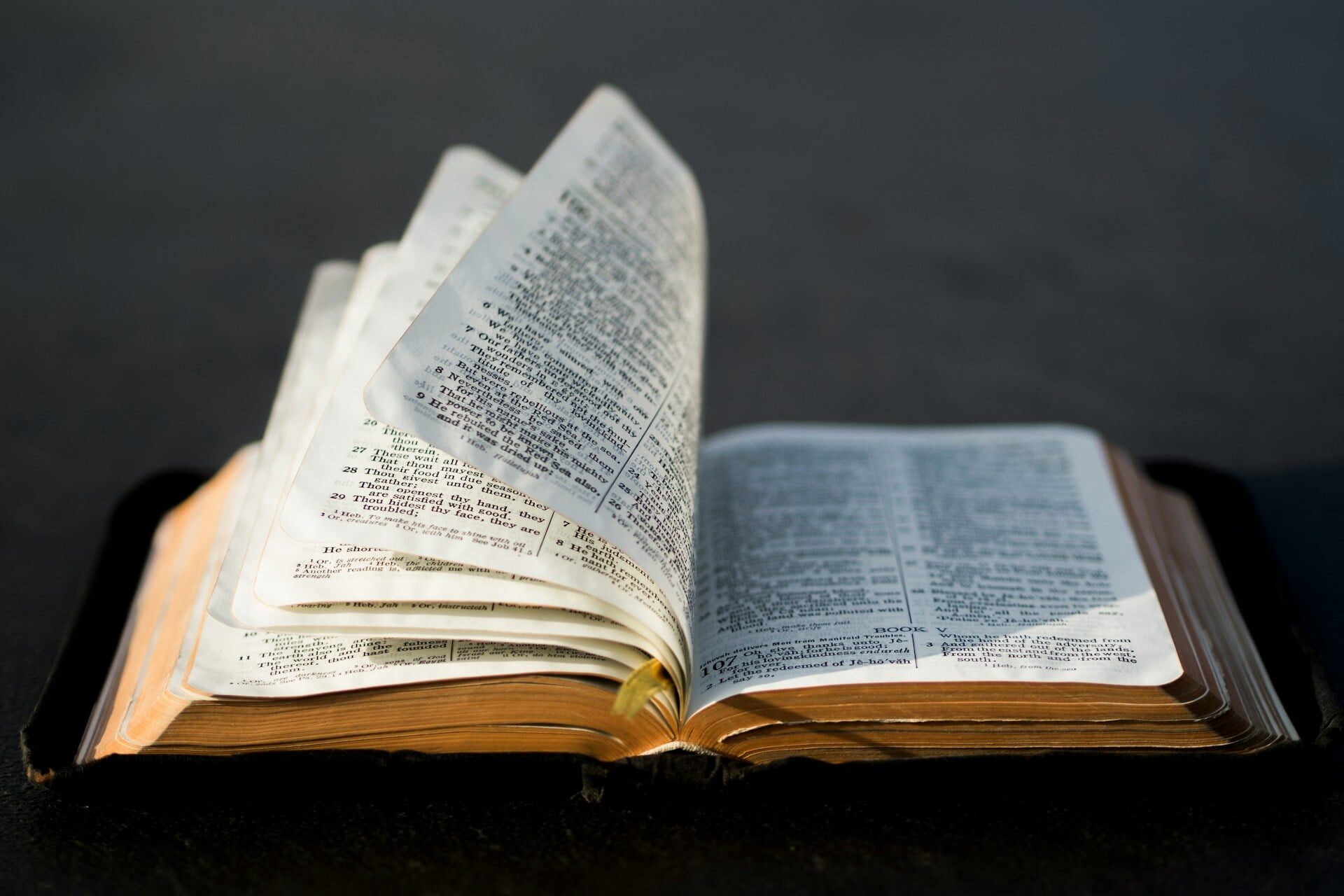
In my previous blog post Marry Truth and Faith by separating them, I discussed some practical reasons to marry truth and faith.
In this post, I aim to examine what the Bible has to say about pursuing both truth and faith, and whether it presents a conflict between these two concepts.
For clarity, I will continue to use the following terms in this article:
- Evidence-confidence: confidence in the truth of a belief that arises from supporting evidence.
- Faith-confidence: confidence in the truth of a belief that does not arise from evidence.
- Total-confidence: the sum of evidence-confidence and faith-confidence.
God on truth
See this wiki entry for other biblical teachings about truth (What does the Bible say about Truth?)
The Bible clearly presents God as one who:
- keeps His promises, doesn’t lie and is not one that would change his mind (1 Samuel 15:29)
- hates people who lies and deceives (Proverbs 6:16-19)
The Bible also clearly commands us to:
- seek evidence for our beliefs (1 Thessalonians 5:20-21)
- not lie, deceive or give false testimony (Zechariah 8:16-17)
- fulfill our vows and promises (Ecclesiastes 5:4-6)
What is less clear is what the Bible teaches about God’s stance towards
- those who genuinely seek the truth but still fail to arrive at the true belief
- alignment between confidence in a belief to the strength of the evidence supporting it
God’s stance towards genuine seekers that hold false beliefs
The Bible contains many passages about seeking knowledge and understanding, especially in Proverbs, a book focused on gaining wisdom and insight. Most of these passages link false beliefs to insincerity. For example, Proverbs 1:28-29 highlights how those who reject wisdom lack a genuine desire to seek truth. Similarly, Matthew 13:10-15 also brings across the point that God hides knowledge from those that are not sincere in their search for understanding. From this, we can infer that those who sincerely seek the truth will be able to understand it. This implies that if we approach God with the right attitude, He will guide us toward true beliefs, particularly in relation to God and Christianity (John 16:13).
Only one passage comes to mind that lays out God’s stance towards genuine seekers with false beliefs: Romans 14. In this chapter, Paul discusses disputable matters (Romans 14:1), using issues like food and the observance of sacred days as examples (Romans 14:5). God’s position on these matters is as follows:
- it is God alone to judge, we should not judge each other (Romans 14:4)
- we should make every effort to do what leads to peace (Romans 14:19)
- He judges based on what we believe, or have faith in (Romans 14:5-9, 14:22-23)
Disputable matters arise because of a lack of evidence-confidence. If clear evidence supported one viewpoint, there would be no dispute. Romans 14 suggests that on disputable matters, God places more emphasis on our beliefs (and the motivations behind them) than on whether we have the true beliefs.
God’s stance towards aligning confidence in a belief to the strength of the evidence
While I think there is no specific passage that directly addresses whether we should align our confidence in a belief with the strength of the evidence supporting it, this idea can be indirectly inferred from several biblical observations:
- God express that we have no excuse to not know about God’s existence because it has been made plain to us (Romans 1:18-19)
- God calls us to test the spirits to see whether they are from God (1 John 4:1)
In Romans 1:18-19, it is emphasized that what can be known about God is evident to all, leaving people without excuse. Indirectly, this suggests that if there were insufficient evidence, people might have a valid reason (i.e. lack of evidence-confidence) for not knowing about God’s existence.
In 1 John 4:1, the instruction to test the spirits implies that we should not accept claims at face value but instead test them. Similarly, in John 10:37, Jesus challenges others to believe in Him only if His works provide sufficient evidence to support the truth of His claims.
From these passages, it can be reasonably inferred that God acknowledges that our confidence in a belief should be proportionate to the strength of the evidence supporting it.
God on Faith
See this wiki entry for other biblical teachings about faith (What does the Bible say about Faith?)
The Bible clearly presents God as one who is pleased by faith and calls us to place our faith in Him. The concept of faith and belief are predominantly used in the context of belief in God, specifically belief in Jesus for the justification of sins to receive the gift of eternal life.
The Bible sometimes use believe (total-confidence) and faith (faith-confidence) interchangeably
In Romans 4:3 and Genesis 15:6, it is said that Abraham believed the Lord, and it was credited to him as righteousness. But in Romans 4:9, it is stated that Abraham’s faith was credited to him as righteousness. In Romans 4:20-22, this is further explained that Abraham’s righteousness was credited because he did not waver despite lacking evidence-confidence, choosing instead to have faith-confidence in God’s power. But does this apply in every context where “believe” and “faith” are used interchangeably?
In Romans 4:23-24, the Bible extends Abraham’s example to the situation of believing or having faith in Christ’s death on the cross as the basis for righteousness. This suggests that it is faith-confidence that is credited, not evidence-confidence. Is this a complete picture?
Let’s consider James 2:18-19. In James 2:18-19, the terms “believe” and “faith” are used interchangeably in a context that aligns more with evidence-confidence. James 2:19 points out that even demons believe in one God, in response to the notion that faith without deeds is incomplete (James 2:18). We know from Romans 1:18-19 that people are without excuse regarding the existence of God because it is clearly evident to them (which relates to evidence-confidence, not faith as defined in Hebrews 11:1).
Let’s also consider John 20:30-31. John 20:31 (and John 10:37) also addresses the same context mentioned in Romans 4:23-24. However, it expresses that signs performed by Jesus (evidence-confidence) were written so that we may believe that Jesus is the Messiah. This suggests that both evidence-confidence and faith-confidence are acknowledged by God as ways to believe (total-confidence).
The way “believe” and “faith” are used interchangeably, along with God’s commendation of faith in the Bible, suggests that a complete picture, or interpretation, is as follows:
- God credits belief (total confidence) in him as righteousness, regardless of whether it comes from faith-confidence or evidence-confidence
- God acknowledges both faith-confidence and evidence-confidence as ways to increase total confidence
- For areas or propositions where we would lack evidence-confidence, rely on faith-confidence in God
Conclusion
The Bible does not depict a direct conflict between the pursuit of truth and faith; rather, it presents them as complementary.
- Truth: Our confidence in a belief should be aligned with the strength of the evidence supporting it.
- Faith: In areas where evidence-confidence is lacking, we are called to rely on faith-confidence in God.
Importantly, faith is only reliable within the context of God due to His unchanging and trustworthy nature. Outside of this context, truth—rooted in evidence—should take precedence.
Leave a Reply